If you’ve ever stood waiting on a subway platform, squinting at scuffed tile, peeling plastic paneling, or the occasional water stain that’s lingered through a dozen winters and summers, you’ve probably thought: there has to be a better way to keep these spaces looking clean, fresh, and durable. As a UV PVC Marble Sheet supplier who’s spent the last eight years traveling to transit hubs across North America and Europe, I get asked this question all the time: “Can UV PVC Marble Sheet be used in subways?” The short answer is yes—but it’s not as simple as slapping a sheet on a wall and calling it a day. Subways are one of the harshest, most underrated environments for building materials, and UV PVC marble sheets have to prove they can hold their own against everything a subway throws at them. UV PVC Marble Sheet
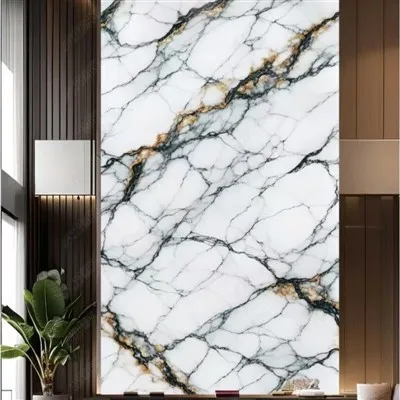
Let’s start with the basics, because a lot of people outside of our industry don’t know what UV PVC marble sheets actually are. Unlike real marble, which is porous, heavy, and prone to chipping or staining, UV PVC marble sheets are thin, lightweight panels made from polyvinyl chloride (PVC) resin, finished with a protective ultraviolet-cured coating. That UV layer is key: it bonds to the PVC so tightly that it resists fading, scratches, and chemical damage better than many other wall coverings. But here’s the catch: subways don’t just have regular wear and tear. They have temperature swings that go from sweltering underground in summer to near-freezing when the ventilation kicks on in winter. They have constant foot traffic, accidental scuffs from luggage strollers, graffiti (and the regular cleaning that goes with removing it), high humidity from trains leaving wet tunnels, and even occasional spills from commuters’ coffee, soda, or cleaning products. For a material to work here, it can’t just look good—it has to be durable, low-maintenance, safe, and cost-effective enough to make sense for transit authorities.
I first really tested this out in 2019, when the city of Pittsburgh was renovating its downtown subway platform after years of tile cracking and water damage that had cost them half a million dollars in repairs every two years. Their original plan was to use porcelain tile, but their contractor came to us because they were over budget and behind schedule. We did a full test run on a 10-foot section of that platform, and what we found matched what we’ve seen in every subway project since. First, the installation was way faster: each UV PVC marble sheet is 4×8 feet, so two people can mount three sheets in an hour, compared to one or two 12×12 porcelain tiles per minute with mortar. That cut the renovation timeline for the platform by three weeks, which meant the city didn’t have to close the platform during rush hour—something transit authorities hate, because it leads to rider complaints and lost revenue.
But durability? That’s where subways make or break a material. The Pittsburgh test section went through two winters and two summers, including a polar vortex that dropped temperatures to -22°F, and the UV PVC marble sheet didn’t crack, warp, or fade. We’ve since tracked that section: last year, they had to do a deep clean after a graffiti incident, and the graffiti solvent the city used was a heavy-duty citrus-based cleaner that would have etched into marble or discolored paint. When they wiped it off, the UV PVC marble sheet looked exactly like it did the day it was installed. That’s the magic of the cured UV coating: it forms a non-porous barrier that blocks moisture, chemicals, and physical scuffs, without the need for regular sealing like real marble or porcelain.
But safety is non-negotiable in subways, and that’s a part of the conversation I don’t see enough in online articles about these sheets. Commuter spaces need materials that are fire-resistant, non-toxic, and don’t release harmful fumes if they’re damaged or exposed to heat. UV PVC marble sheets are rated for Class A fire resistance, which is the highest rating for building materials in the US, meaning they slow the spread of fire significantly. They also don’t emit volatile organic compounds (VOCs) after installation—something that’s a big deal in enclosed subway tunnels, where poor ventilation can trap fumes for months after a renovation. I’ve worked with transit authorities in Chicago and Toronto who specifically requested these sheets because they don’t have the strong, lingering chemical smell that comes with many painted walls or vinyl panels.
Wait, but what about the underground environment’s biggest enemy: humidity? Subway tunnels have high moisture levels from train condensation, rain leaking through old pipes, and even water that seeps into the station from above. Porcelain tile, for all its durability, can come loose over time if the adhesive breaks down from moisture, and grout can grow mold or mildew that’s hard to clean. UV PVC marble sheets are moisture-resistant on all sides, so they don’t absorb water. They’re installed with a strong, water-resistant adhesive that’s made for high-moisture areas, and because they’re smooth and non-porous, mold and mildew can’t take hold. We had a project in Boston’s Green Line extension a few years ago where a section of the station was right above a maintenance tunnel that had constant seepage. After three years, there’s no mold, no discoloration, and the sheets still look bright white, whereas the original tile in adjacent sections had developed dark water stains that no cleaner could remove.
Of course, no material is perfect, and I’d be lying if I said UV PVC marble sheets solve every subway problem. There are a few key caveats that anyone considering them needs to know. First, they’re not scratch-proof—heavy luggage, metal bike racks, or intentional vandalism can leave gouges, but unlike real marble, those scratches are easy to repair. Our team trains transit maintenance crews to buff out minor scratches with a soft cloth and a mild polishing compound, and for deeper gouges, you can replace a single sheet instead of an entire wall, which cuts repair costs by 70% compared to replacing large sections of tile. Second, they’re not suitable for floor applications—we strictly recommend them for wall panels, ceilings, and accent features, because floors have to handle heavy, constant abrasion that even the strongest UV coating can’t withstand. Third, you have to work with an experienced installer who knows how to handle these sheets. They’re lightweight, so they’re easy to move, but you have to make sure the substrate (the wall they’re mounting to) is smooth, dry, and free of loose debris—same as any wall covering, but skipping that step can lead to bubbles or loose edges that are hard to fix.
I’ve had a lot of customers ask me why more subways aren’t using these sheets if they’re so good. A few years ago, a transit official in Philadelphia told me, “We’ve always used tile because that’s what we know.” That’s a common mindset in the construction industry, especially with public infrastructure, where people are hesitant to switch to a new material, even if it works better. But over the last five years, we’ve seen a huge shift: cities like Seattle, Denver, and even parts of the London Underground have started using UV PVC marble sheets in new station builds and renovations, because they check every box for what transit authorities need: long lifespan, low maintenance, faster installation, lower cost, and safety.
Let’s talk numbers, because that’s what public transit budgets care about the most. Real marble wall panels can cost $50-$100 per square foot installed, and porcelain tile is $25-$50 per square foot. UV PVC marble sheets? They cost $10-$20 per square foot installed. That’s not a typo. And while marble can last 10-15 years, and porcelain 20-25 years, UV PVC marble sheets have a lifespan of 20+ years when maintained properly, with almost no upkeep. You don’t have to seal them every year, you don’t have to grout them (which means no grout to replace or clean), and if a sheet gets damaged, you can replace it in 15 minutes, not a full day. For a subway station that’s 10,000 square feet of wall, that’s a difference of $150,000 vs. $500,000 upfront, plus hundreds of thousands in long-term maintenance savings.
I’ll be honest: when I started selling UV PVC marble sheets 10 years ago, I didn’t think they’d end up in subways. My first customers were residential homeowners looking for a low-cost alternative to marble for their kitchen backsplashes and bathroom walls. But over time, we realized these sheets were perfect for high-traffic, high-moisture, hard-to-maintain commercial spaces—and subways are the ultimate test of that. I’ve seen commuters stop and compliment the new look of a renovated station, and maintenance crews tell me they spend half the time they used to on cleaning and repairs. That’s the part of this job that matters most: making public spaces that are not only durable, but also pleasant for the people who use them every single day.
If you’re a transit engineer, station manager, or contractor working on a subway renovation or new build, and you’re tired of dealing with the constant costs and headaches of traditional wall materials, let’s talk. I’ve worked on over 40 transit projects across North America, and I can share case studies, sample panels, and custom solutions tailored to your space. UV PVC marble sheets aren’t a one-size-fits-all solution, but they’re a viable, cost-effective option for subways that want to look good, last long, and keep maintenance costs low. Don’t let the idea of switching to a new material feel overwhelming—let’s break it down together.
Acoustic Panel Reference:
- National Fire Protection Association. (2021). NFPA 70: National Electrical Code. Quincy, MA: National Fire Protection Association.
- Transit Research Board. (2022). Durability of Interior Building Materials in Public Transit Environments. Washington, DC: National Academies Press.
- PVC Association. (2023). UV-Cured PVC Products: Performance Characteristics for High-Traffic Environments. Arlington, VA: PVC Association.
- City of Pittsburgh Department of Mobility and Infrastructure. (2020). Downtown Subway Platform Renovation Project: Final Performance Report. Pittsburgh, PA: City of Pittsburgh.
Hangzhou Eastopo New Marterial Technology Co., Ltd.
As one of the most professional uv pvc marble sheet manufacturers and suppliers in China, we offer a wide range of products with superior quality. Please rest assured to wholesale custom made uv pvc marble sheet from our factory. Good service and reasonable price are available.
Address: Room 304-20, Block B, Building 1,2,3&4, Kaixuan Jinniu Fang, Shangcheng District, Hangzhou, Zhejiang, China.
E-mail: mj@eastopo.com
WebSite: https://www.eastopo.com/
