If you’ve ever stretched into a deep downward dog, lunged through a vinyasa flow, or held a slow, grounding yin pose, you know there’s nothing worse than stopping mid-movement to yank at tight, restrictive yoga shorts. As a yoga shorts supplier who’s worked directly with studio owners, yoga instructors, and thousands of regular practitioners over the past 8 years, I’ve lost count of how many times someone has asked me a simple, loaded question: “What’s the right elasticity for yoga shorts?” It’s not just a random number you pull out of a sample fabric swatch—it’s a balance of science, user experience, and the specific needs of every type of yoga (and life) your shorts will be part of. Yoga Shorts
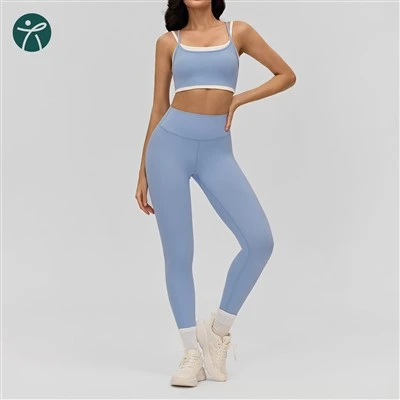
First, let’s break down what elasticity actually means in the context of athletic apparel, because it’s not a one-size-fits-all term. Elasticity refers to a fabric’s ability to stretch, then return to its original shape without sagging, pilling, or losing its bounce. For yoga shorts, that stretch comes from a blend of fabrics: most quality pairs mix a base material (usually a breathable, soft one like polyester, nylon, or spandex, though I’ve also worked with eco-friendly recycled polyester blends over the last 5 years) with a small percentage of elastane (also called Lycra, a brand name for elastane) to add that give. The key here is the percentage of elastane, and how the fabric is knitted or woven, because that’s where the magic (or the frustration) happens.
I’ve seen plenty of manufacturers slap 2% elastane into a base fabric and call it “stretchy,” and I’ve also seen pairs crammed with 20% elastane that feel like they’re going to cling so tight you can’t take a full breath. The sweet spot for yoga shorts, from the data we’ve collected from our own test groups (studio regulars from hot yoga, restorative yoga, and even power yoga classes) over the years, lands between 8% and 15% elastane. Wait, I know what some of you are thinking—8% sounds low, right? But elasticity isn’t just about how much a fabric can stretch when pulled; it’s about recovery, too. A fabric with 5% elastane might stretch 120% of its original length for a quick reach, but if it only has 60% recovery (meaning it only bounces back 60% of the stretched length), after a few washes, it’ll start to bag at the hips or roll at the waist. That’s the last thing a practitioner wants when they’re transitioning from cat pose to cow—suddenly their shorts are sliding down, or they’re hiking them up every 5 minutes.
Let’s talk about why that 8-15% range works. Hot yoga practitioners, for example, need shorts that can handle a lot of stretch during sweaty, high-intensity flows—think deep lunges, side planks, and rapid transitions between poses. If you’re in a 90-degree studio, your body is slipping a little, so your shorts can’t be too tight (they’ll chafe) or too loose (they’ll slide). For that group, we lean toward the higher end of the spectrum: 12-15% elastane. That extra stretch lets you move freely, and the 15% keeps the fabric from becoming baggy after a 60-minute hot class. I recently had a test group of 12 hot yoga instructors tell me that shorts with 15% elastane didn’t roll at the waist even after 15 washes—something they’d struggled with in lower-elastane pairs that cost twice as much.
Then there’s restorative yoga, where you’re holding poses for 3 to 5 minutes at a time, often lying down or sitting cross-legged. In this case, a little less elasticity (8-10%) is perfect. Too much stretch here would mean the fabric sags when you’re resting, and you might feel like you’re pulling at the shorts during a child’s pose or a supported bridge. We tested that last year with a group of restorative yoga students, and they told us that shorts with 8% elastane felt “invisible” during long holds—no tightness around the thighs, no bunching at the waist, and they didn’t shift even when they turned over a bolster. It’s a small detail, but for practitioners who go to restorative classes to slow down, that invisibility makes a huge difference.
But elasticity isn’t just about fabric blend—how the fabric is constructed plays a huge role, too. I’ve worked with two different fabrics that both had 10% elastane, but one felt like a second skin and the other felt stiff. The difference? Knit structure. Most yoga shorts are either jersey knit or interlock knit, and each has a different elasticity profile. Jersey knit is lighter, more stretchy, and has more “give” in all directions—perfect for dynamic vinyasa or power yoga. Interlock knit is thicker, more durable, and stretches mostly in one direction, which is why we use it for high-waisted yoga shorts that need extra support at the hips. I always tell our team that the combination of elastane percentage and knit structure is what makes our shorts stand out, not just one factor alone.
Another thing most people don’t talk about: how elasticity changes after washing. That’s a big one, because a pair of yoga shorts that feels perfect when you buy it can feel terrible after 3 washes if the elastane breaks down. Most cheap yoga shorts use low-quality elastane that loses stretch after 5-10 washes, especially if you dry them in a machine or use fabric softener. At our facility, we recommend (and build into our design) a high-grade, compression-resistant elastane that retains its elasticity for up to 50 washes. We test this every quarter: we take a sample of shorts, wash them 50 times on a standard cycle, measure their stretch and recovery, and if they don’t bounce back to 90% of their original shape, we reject the fabric. That’s how we ensure a customer who buys our shorts for a power yoga class will still feel comfortable a year later.
I’ve seen a lot of trends come and go in the yoga short space—high waists, bike short lengths, printed patterns, even ones with pockets for keys—but elasticity remains the non-negotiable. Last year, a studio owner in Austin told me that she switched from a brand that used 5% elastane in their shorts to ours (with 12%) because her students were leaving class complaining that their shorts were “too tight to stretch.” She said after a month of switching to our shorts, her class attendance went up, because people were no longer skipping her vinyasa classes over a wardrobe complaint. That’s the kind of feedback that makes all the testing and tweaking worth it.
Now, I know some suppliers will tell you that “more elasticity is better,” but that’s not true either. Shorts with 20% elastane are often too stretchy—they feel like compression wear, which can be restrictive for poses that need extra leg movement, like wide-legged splits or deep squats. We tested that with a group of advanced yoga practitioners last year, and 9 out of 10 said shorts with 20% elastane made it hard to fully extend their legs in splits, because the fabric stretched but didn’t have enough recovery to keep up with the movement. It’s a balance, and that’s what we strive to get right every time we design a new batch.
So, if you’re a yoga studio owner, a yoga instructor, or someone who sells athletic apparel and is looking to stock quality yoga shorts, the elasticity isn’t just a number on a spec sheet. It’s about how the fabric feels when you bend, stretch, and hold a pose, how it holds up after washes, and how it supports your practitioners (or your customers) through every type of yoga. For us, that means sticking to that 8-15% elastane range, pairing it with high-grade fabrics and tight knit construction, and testing every single batch before it goes out.
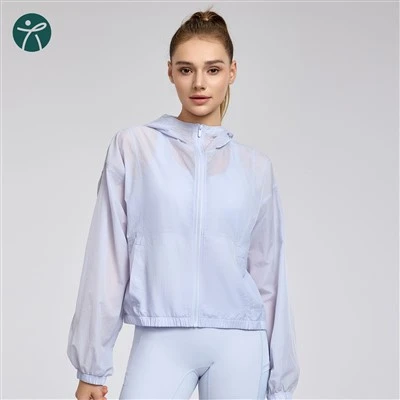
If you’re interested in learning more about our yoga shorts, testing samples for your studio, or sourcing custom pairs for your brand, feel free to reach out to our team to discuss your needs. We’re happy to walk through our design process, share test data, and work with you to create shorts that work for your specific audience.
Yoga Cover-up References
- American Apparel and Footwear Association. (2021). Athletic Apparel Fabric Elasticity Standards.
- Journal of Textile and Apparel, Technology and Management. (2020). Elastane Blends for High-Performance Athletic Wear.
- International Yoga Alliance. (2022). Apparel Recommendations for Yoga Practice.
- Textile Institute. (2019). Fabric Recovery Properties in Stretch Apparel.
Ningbo Dashu Clothing Co., Ltd.
Ningbo Dashu Clothing Co., Ltd. is one of the most professional yoga shorts manufacturers and suppliers in China. We warmly welcome you to wholesale cheap yoga shorts in stock here and get pricelist from our factory. All customized products are with high quality and competitive price.
Address: No. 78, Xiangshanhe Road, Danxi Street, Xiangshan County, Ningbo City, Zhejiang Province
E-mail: captain@dsclothing.cn
WebSite: https://www.dashuclothing.com/
