If you’re reading this, chances are you’ve walked past a car lot, glanced at a dashboard’s sleek finish, or ran your thumb over a polished taillight lens and wondered, “How’d they get that plastic to look that clear?” As someone who’s spent 12 years running an automotive plastic parts supply company, I’ve heard that question a thousand times. More importantly, I’ve spent nearly that long solving the opposite problem: delivering transparent plastic components that don’t cloud up, scratch easy, or fail mid-vehicle’s lifespan. Automotive transparency isn’t just about looks—it’s about safety, durability, and brand trust. Clouded headlight lenses can reduce nighttime visibility by up to 50%, per NHTSA data, and faulty interior transparent trim erodes a vehicle’s perceived quality faster than any scratch. Over the years, I’ve worked through trial, error, and countless conversations with automotive engineers to refine the practices that actually improve transparency for our parts, no empty marketing fluff required. Let’s get into the real, practical work—stuff that doesn’t involve chasing the latest hype, but sticking to proven, scalable, supplier-focused steps. Automotive Plastic Parts
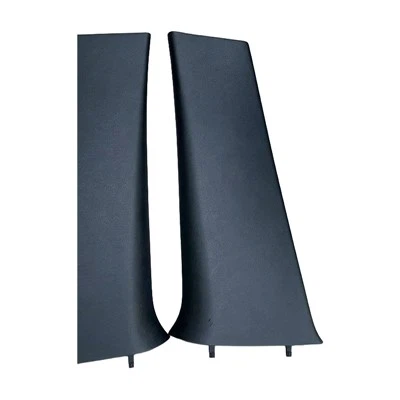
First, let’s start with the foundation you can’t skip: resin selection. This isn’t just picking the cheapest polycarbonate (PC) or acrylic—this is vetting resin grades specifically formulated for automotive use, not just generic consumer plastics. Early in my career, we made a rookie mistake: we sourced a low-cost PC grade from a new supplier that had great lab results for clarity, but once it hit production, every third part had micro-voids hidden in the raw material that caused yellowing after 6 months of UV exposure. That cost us three small fleet client contracts, and we haven’t forgotten it. Today, we test every resin batch for two key properties: light transmittance and weatherability. For most exterior transparent parts (headlight lenses, fog light covers), we stick to impact-modified PC with a light transmittance rating of 88% or higher (that’s the threshold for meeting FMVSS 108 headlight requirements). For interior parts (center console trim, gauge cluster covers), we use optical-grade acrylic (PMMA) for its exceptional clarity, though we adjust the grade for low-temperature impact resistance to avoid cracking in cold climates, a common tradeoff with pure PMMA. The trick here is working with resin suppliers who provide full traceability: we ask for batch-specific light transmission test reports, not just generic grade specs. If a resin supplier can’t tell us where their raw monomer came from, we walk away. Contamination in resin feedstock is the single biggest hidden cause of poor transparency—even a tiny speck of PVC or polyethylene in a PC batch will scatter light and create permanent clouding, so pre-use resin filtration is non-negotiable. We use 50-micron mesh filters for all resin hoppers, and even add a secondary inline filter during injection molding to catch any stray particles that slipped through.
Next, the molding process is where a lot of suppliers cut corners, and transparency takes the hit. I’ve seen shops run injection molding at maximum speed to hit quotas, which leaves air bubbles, uneven cooling, and flow lines that ruin clarity. When we set up a production run for a transparent part, we adjust every parameter not for speed, but for molecular alignment. For PC, that means keeping the barrel temperature between 280–300°C, not cranking it hotter to melt faster—overheating PC causes thermal degradation, which turns the material yellow and reduces light transmittance by 2–3% over time. For PMMA, we keep temperatures a touch lower (240–260°C) to avoid chain scission, another cause of clouding. Cooling is just as critical: we use conformal cooling lines in our molds, not straight drilled lines, which ensures every part cools evenly. Uneven cooling creates residual stress in the plastic, which leads to two things: warping (bad fits on the vehicle) and birefringence, that rainbow-like haze you sometimes see on clear plastic parts when light hits them at an angle. We test for birefringence on every production lot using a polariscope—if a part shows any color under polarized light, it gets scrapped. We also slow the injection speed way down for thin, high-clarity parts, like headlight lenses. Fast injection pushes material too hard, creating flow lines that are impossible to polish out later. Last year, we adjusted injection speed for a 1.5mm thick taillight lens from 50 mm/s to 20 mm/s, and cut our defect rate for clarity by 18% almost overnight. It’s slower, but when your parts have to pass DOT and OEM specs, slow and steady wins.
Surface finishing is the final step that makes the difference between a “good enough” transparent part and one that lasts 10 years without clouding. A lot of suppliers skip this or use cheap coatings that scratch off in 2 years, leaving lenses that look decades old prematurely. For exterior parts, we use a two-step hard coating process, not the single-coat stuff you see on cheap consumer electronics. First, we apply a siloxane-based primer coat that bonds tightly to the plastic surface, then a topcoat of UV-stabilized polyurea that’s scratch-resistant enough to pass the taber abrasion test (we require 500 cycles with less than 10% haze gain, the OEM standard for headlight lenses). We also add a UV absorber to every exterior coating—this blocks the 300–400 nm UV rays that break down plastic polymers over time, which is the main cause of yellowing and clouding on older headlight lenses. For interior parts, where scratch resistance isn’t as critical, we still do a clear topcoat to protect the plastic from chemical damage (spilled coffee, cleaning products) that can etch the surface and reduce clarity. The key here is curing the coatings properly, not rushing it. We cure our exterior coatings in a nitrogen oven, not air, to avoid any airborne dust particles sticking to the wet surface—even a single dust speck is enough to create a tiny imperfection that scatters light. We have a dedicated finishing room with HEPA filtration, because a clean surface is the only way to a consistent clear finish.
Quality control is what keeps all these steps from falling apart. I’ve worked with clients who thought their parts were fine, only to have them rejected during pre-delivery inspection for a 2% haze gain, which is below the 1% threshold most OEMs require. We implemented a 100% visual inspection under bright, diffused light for every part, plus random lab testing for haze and light transmittance on 5% of each production run. We also accelerated aging tests in our in-house weather chamber, where we expose parts to 1000 hours of UV light and temperature fluctuations from -40°C to 85°C, to make sure our parts don’t cloud or yellow before they ever reach a customer’s driveway. Early on, we relied on our customers to do this testing, but we found that catching issues before delivery saved us far more than the cost of a weather chamber. Last quarter, we caught a batch of PC parts that had a 3% haze gain after aging—something our customers’ external testing missed—and avoided a recall that would have cost us hundreds of thousands of dollars.
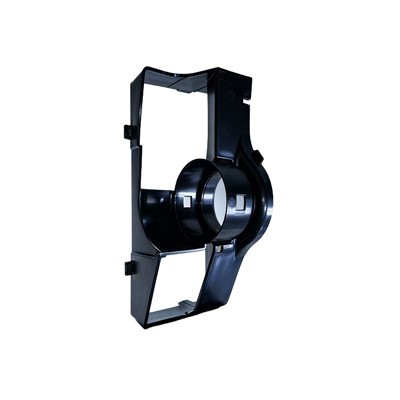
Now, transparency doesn’t just apply to our parts—it’s the reason I’m writing this today. Too many automotive suppliers hide behind jargon or claim they have a “secret formula” for clear plastic, but the truth is, it’s all about consistent, proven practices. If you’re an OEM or tier 1 supplier looking to improve the clarity, durability, and safety of your transparent automotive plastic parts, we’d be happy to walk you through our process, share our latest test data, or collaborate on custom parts for your next vehicle line. We don’t do one-size-fits-all, and we don’t cut corners. For more information or to discuss your specific requirements, get in touch with our sales team.
Plastic Auto Parts References
- National Highway Traffic Safety Administration (NHTSA). (2022). Headlight Performance and Visibility Final Rule. Federal Motor Vehicle Safety Standard No. 108.
- American Society for Testing and Materials (ASTM). (2019). Standard Test Method for Haze and Luminous Transmittance of Transparent Plastics. ASTM D1003-19.
- Society of Plastics Engineers (SPE). (2021). Automotive Plastics Design and Processing Handbook, 2nd Edition.
- International Organization for Standardization (ISO). (2020). Plastics—Determination of Weathering Resistance by Exposure to Laboratory Light Sources. ISO 4892-2:2020.
Ningbo Xiaohua Plastic Industry Co., Ltd.
We are one of the most experienced automotive plastic parts manufacturers and suppliers in China, specialized in providing high quality customized service to global clients. We warmly welcome you to wholesale durable automotive plastic parts in stock here from our factory.
Address: No. 878, Gulin Section, Yinxian Avenue, Haishu District, Ningbo City, Zhejiang Province
E-mail: 13736009355@163.com
WebSite: https://www.cnxiaohua.com/
