Hey there, fellow motor enthusiasts! I’m an inrunner brushless motor supplier, and today I wanna chat about one of the most important aspects of these motors: the starting current. Inrunner Brushless Motor

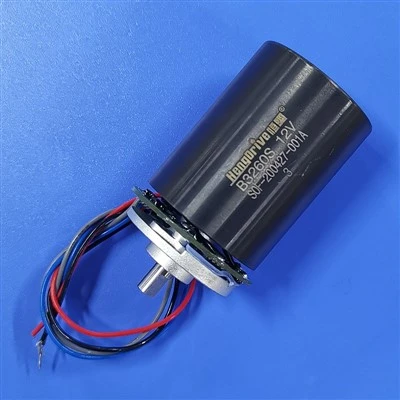
Let’s start with the basics. An inrunner brushless motor is a type of electric motor that’s commonly used in a variety of applications, from drones and RC cars to industrial machinery. Unlike traditional brushed motors, inrunner brushless motors don’t have brushes that wear out over time, which means they’re more reliable and require less maintenance.
So, what exactly is the starting current of an inrunner brushless motor? Well, the starting current is the amount of current that the motor draws when it’s first turned on. This current is typically much higher than the motor’s normal operating current, and it can last for a few milliseconds to a few seconds, depending on the motor’s design and the load it’s driving.
Why is the starting current so important? Well, for one thing, it can have a big impact on the performance of the motor. If the starting current is too high, it can cause the motor to overheat, which can damage the motor and reduce its lifespan. On the other hand, if the starting current is too low, the motor may not be able to start at all, or it may start slowly and struggle to reach its full speed.
Another reason why the starting current is important is that it can affect the power supply that’s used to drive the motor. If the starting current is too high, it can cause the power supply to overload, which can damage the power supply and other components in the system. This is why it’s important to choose a power supply that’s capable of handling the starting current of the motor.
So, how do you determine the starting current of an inrunner brushless motor? Well, there are a few different factors that can affect the starting current, including the motor’s design, the load it’s driving, and the power supply that’s used to drive the motor.
One of the most important factors that affects the starting current is the motor’s design. In general, motors with a higher number of poles tend to have a lower starting current than motors with a lower number of poles. This is because motors with a higher number of poles have a higher inductance, which means they’re more resistant to changes in current.
Another factor that affects the starting current is the load that the motor is driving. If the load is heavy, the motor will need to draw more current to start and accelerate. On the other hand, if the load is light, the motor will need to draw less current to start and accelerate.
Finally, the power supply that’s used to drive the motor can also affect the starting current. If the power supply has a low voltage or a high internal resistance, it may not be able to provide enough current to start the motor. On the other hand, if the power supply has a high voltage and a low internal resistance, it may be able to provide enough current to start the motor.
So, how can you reduce the starting current of an inrunner brushless motor? Well, there are a few different techniques that you can use. One technique is to use a soft-start circuit, which gradually increases the voltage and current to the motor over a period of time. This can help to reduce the starting current and prevent the motor from overheating.
Another technique is to use a motor controller that’s designed to limit the starting current. These controllers typically use a technique called pulse-width modulation (PWM) to control the voltage and current to the motor. By adjusting the PWM signal, the controller can limit the starting current and prevent the motor from overheating.
Finally, you can also choose a motor that’s designed to have a lower starting current. Some motors are designed with a higher number of poles or a higher inductance, which can help to reduce the starting current.
As an inrunner brushless motor supplier, I know how important it is to choose the right motor for your application. That’s why I offer a wide range of inrunner brushless motors that are designed to meet the needs of different applications. Whether you’re looking for a motor for a drone, an RC car, or an industrial machine, I’ve got you covered.
If you’re interested in learning more about inrunner brushless motors or if you’re looking to purchase a motor for your application, please don’t hesitate to contact me. I’d be happy to answer any questions you may have and help you choose the right motor for your needs.
In conclusion, the starting current of an inrunner brushless motor is an important factor that can have a big impact on the performance and lifespan of the motor. By understanding the factors that affect the starting current and using techniques to reduce it, you can ensure that your motor starts and runs smoothly and efficiently.
Personal Care Brushless Motor References:
- "Brushless DC Motors: Theory, Design, and Application" by Ned Mohan
- "Electric Motors and Drives: Fundamentals, Types, and Applications" by Austin Hughes and Bill Drury
- "Power Electronics: Converters, Applications, and Design" by Ned Mohan, Tore M. Undeland, and William P. Robbins
Shenzhen HengDrive Technologies Co., Ltd.
Shenzhen HengDrive Technologies Co., Ltd. is one of the most professional inrunner brushless motor manufacturers and suppliers in China, specialized in providing high quality customized service. We warmly welcome you to buy the newest inrunner brushless motor in stock here from our factory.
Address: Building A & F, FuNing Hi-Tech Park, XinTian Road, FuHai Street, BaoAn District, ShenZhen, GuangDong Province, China.
E-mail: Marketing001@hengdrive.com
WebSite: https://www.hengdrivemotor.com/
