Hey there! I’m a supplier of 3.00mm Pitch components, and I’ve been getting a lot of questions lately about the environmental requirements for these little guys. So, I thought I’d sit down and share what I know with you all. 3.00mm Pitch
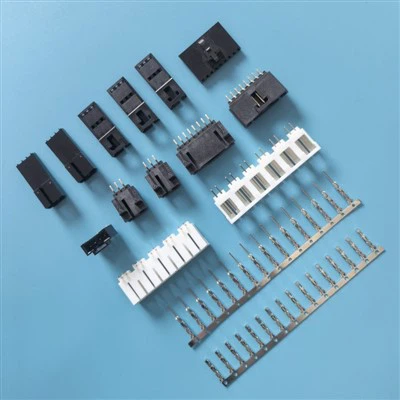
First off, let’s talk about what 3.00mm Pitch components are. These are essentially electrical components where the distance between the centers of adjacent pins or terminals is 3.00 millimeters. They’re used in a whole bunch of electronic devices, from consumer gadgets to industrial machinery. And because they’re used in so many different places, they need to be able to handle different environmental conditions.
Temperature Requirements
One of the most important environmental factors for 3.00mm Pitch components is temperature. These components can generate heat when they’re working, and they also need to function in different temperature settings.
For normal operation, most 3.00mm Pitch components are designed to work within a temperature range of -20°C to 85°C. That’s a pretty wide range, but it makes sense because they can be used in various environments. For example, in a car, the temperature under the hood can get really high on a hot day. On the other hand, in a cold storage facility or an airplane flying at high altitudes, the temperature can drop way below freezing.
If the temperature goes above 85°C, the components can start to malfunction. The materials inside them can expand, which might cause the pins to shift slightly and lead to poor electrical connections. Also, the performance of the semiconductors can degrade, which means the component might not work as efficiently or might even stop working altogether.
On the flip side, if the temperature drops below -20°C, the materials can become brittle. This can make the pins more likely to break if there’s any vibration or mechanical shock. And the electrical conductivity of some materials can change at low temperatures, which can also affect the component’s performance.
Humidity Requirements
Humidity is another biggie. We need to make sure that 3.00mm Pitch components can handle different levels of moisture in the air.
In general, these components are designed to work in a relative humidity range of 10% to 95%. In a very dry environment (around 10% humidity), there’s not much moisture in the air. This can lead to static electricity buildup. Static electricity can be really bad for these components because it can cause electrostatic discharge (ESD). ESD can damage the sensitive electronic parts inside the component, like the integrated circuits.
On the other hand, in a high – humidity environment (up to 95%), there’s a lot of moisture in the air. This moisture can condense on the components, especially if there are sudden temperature changes. Condensation can cause corrosion on the pins and other metal parts of the component. Corrosion can increase the resistance of the electrical connections, which can lead to poor performance or even complete failure of the component.
Vibration and Shock Requirements
3.00mm Pitch components are often used in devices that are subject to vibration or shock. For example, they might be used in a washing machine, which vibrates a lot during its spin cycle, or in a handheld device that could be dropped accidentally.
These components need to be able to withstand a certain amount of vibration and shock. The vibration requirements usually specify the frequency range and the amplitude of the vibration that the component can handle. For example, a component might be designed to handle vibrations with a frequency of 10Hz to 2000Hz and an amplitude of up to 2g (where g is the acceleration due to gravity).
As for shock, the component should be able to handle a certain level of impact. This is usually specified in terms of the acceleration and the duration of the shock. For example, a component might be rated to withstand a shock of 50g for a duration of 11ms. If the vibration or shock exceeds these limits, the pins can break or become loose, and the internal connections can be damaged.
Chemical and Dust Requirements
In some industrial or outdoor environments, 3.00mm Pitch components can be exposed to chemicals and dust.
Chemicals can be really harmful to these components. For example, acidic or alkaline substances can corrode the metal parts. Some solvents can also dissolve the protective coatings on the components. To protect against chemicals, we often use special coatings on the components. These coatings act as a barrier between the component and the chemicals in the environment.
Dust can also be a problem. If dust accumulates on the component, it can block the ventilation holes, which can cause the component to overheat. Also, dust particles can get into the electrical connections and increase the resistance. To prevent dust from affecting the components, we can use enclosures or filters to keep the dust out.
Why Meeting These Requirements is Important for You
As a buyer, you want components that are going to work reliably in your products. If the 3.00mm Pitch components you use don’t meet the environmental requirements, it can lead to a lot of problems. For example, your products might fail prematurely, which can cost you money in terms of repairs and replacements. It can also damage your reputation with your customers if they keep having issues with your products.

On the other hand, if you use components that meet all the environmental requirements, you can be more confident that your products will work well in different conditions. This can give you a competitive edge in the market, and it can also lead to happier customers.
Let’s Talk!
2.00mm Pitch If you’re in the market for 3.00mm Pitch components and want to know more about how they meet these environmental requirements, I’d love to chat. I have a lot of experience in this field, and I can help you find the right components for your specific needs. Whether you’re working on a small consumer product or a large industrial project, I’m here to assist you. Just reach out, and we can start discussing your requirements.
References
- "Electronics Packaging Handbook" by Richard C. Jaeger
- "Environmental Testing of Electronic Components" by John D. Graham
- "Reliability Engineering and Management" by Kai-Yuan Cai
Dongguan Yinglian Electronics Co., Ltd.
We’re well-known as one of the most professional 3.00mm pitch suppliers in China. With abundant experience, we warmly welcome you to buy bulk advanced 3.00mm pitch made in China here from our factory. If you have any enquiry about cooperation, please feel free to email us.
Address:
E-mail: James@csg-china.com
WebSite: https://www.csgconn.com/
