Hey everyone, let’s cut to the chase because I know most of you here (whether you’re a retail display manager, a brand merchandiser, or another plastic hand strap supplier) don’t want fluff—you care about one big question right now: do plastic hand straps actually crack, and should you be worried if you’re using (or selling) them? Plastic Hand Strap

Full disclosure first: I’m a plastic hand strap supplier, so this isn’t some random internet take I pulled up at 2am. I’ve been in this game for 7 years, spent way too many late nights testing batches that came back with weird cracks, and fielded dozens of panicked calls from clients who thought their entire display setup was doomed because a handful of straps split. Let’s break this down like we’re sitting in my warehouse break room with a soda, no stuffy lab jargon.
First off, let’s get one thing straight: not all plastic hand straps are created equal. I see way too many suppliers selling cheap, flimsy stuff that’s basically thin plastic wrap with a hole cut in it—those are the ones that crack before you even unload them from the truck. But the good ones? The ones we make? They shouldn’t crack under normal use. Wait, but “normal use” is vague, right? Let’s define that real quick. Normal use is hanging a 5lb retail tag, a small accessory, or a product display panel indoors, no extreme temperatures, no being dropped, no being chewed by a warehouse dog (yes, that happened to a client’s batch once). That’s baseline.
Now, let’s talk about why plastic hand straps crack, because it’s not just “they’re made of plastic.” First up: material choice. Most standard plastic hand straps are made from either LDPE (low-density polyethylene) or PP (polypropylene) — two of the most common plastics for this kind of thing. LDPE is flexible, great for stretch, but if it’s too thin (under 0.1mm, let’s say) or has recycled content that’s old and degraded, it gets brittle. PP is stiffer, more durable for heavier loads, but if it’s not formulated right—too much filler, or no UV stabilizer—it’s a ticking time bomb. We had a batch of PP straps once that didn’t have UV stabilizer, and within 2 weeks of being outside in a pop-up shop at a farmers market, half of them cracked. Not because the material was bad, but because we skipped a key additive to save a penny on that batch. Oops, lesson learned.
Next, manufacturing inconsistencies. This is the big one that most people don’t talk about. Plastic hand straps are made by extrusion, right? You melt the plastic, push it through a die to get the strap shape, then cool it. If the cooling is uneven, that creates internal stress in the plastic—like when you bend a paper clip back and forth until it snaps, that’s stress fracture. If the die has a tiny imperfection, or the line speed is too fast, you end up with thin spots that are basically crack waiting to happen. I once got a sample from a competitor that had a spot thinner than a human hair right where the hole was punched—of course that cracked when they hung a 3lb t-shirt tag. We now do a 100% visual check for thin spots and stress marks on every batch before it leaves our warehouse, and that’s cut our crack returns by like 90%.
Then there’s environmental factors. This is the sneaky one that trips up even the best products. If you’re using plastic hand straps outside—for outdoor displays, farmers market signs, holiday wreaths—that’s a totally different game. UV light from the sun breaks down plastic over time, called photodegradation. Even if your strap says “UV-resistant,” that’s only so good. If it’s freezing outside, plastic becomes way more brittle—so if you hang a strap in January in Minnesota, it’s way more likely to crack when someone yanks on it to adjust a display than it would be in July in Florida. We had a client in Canada last winter who called saying 10% of their straps cracked overnight; turns out they used our standard outdoor-grade straps (which are fine for mild cold) not our cold-formulated ones. We fixed that for them no charge, but it made us realize how many people mix up grade for different temps.
Wait, but what about overloading? That’s another avoidable one. Plastic hand straps have a weight rating, right? Ours are clearly labeled: LDPE for up to 5lbs, PP heavy-duty for up to 15lbs. If you hang a 10lb sign on a LDPE strap, that’s way over capacity, and yeah, it’s gonna crack. I see this all the time—retailers grabbing the cheapest strap without checking the rating, then blaming the strap when it breaks. It’s like using a rubber band to hold a brick; not the rubber band’s fault, ya know?
Now, let’s get to the myth vs. reality here. A lot of people think plastic hand straps are just garbage that’ll crack in 6 months. No, that’s only the cheap, poorly made ones. We’ve had clients use our straps for 3 years in indoor settings, no cracks at all. But if you’re using the wrong material for your use case, or skipping quality checks, you’re gonna have issues. That’s the takeaway, right?
I also want to talk about what we do at our shop to prevent cracking, because that’s probably what you care about if you’re looking for a supplier. First, we only use new, virgin plastic—recycled content can be fine, but most cheap recycled stuff has plastic that’s already been broken down once, making it brittle. We add the right stabilizers: UV for outdoor, cold-resistant for places under 32F, even anti-slip additives if needed. Our extrusion lines are calibrated every single morning, so cooling is even, no stress marks. And we test every batch: we pull 50 straps, hang them with the max weight rating, leave them for 72 hours, check for stress cracks, then do a pull test to make sure they don’t snap under pressure. We even have a drop test—drop a pallet strapped with our straps from 3 feet up, no cracks.
I know a lot of you are probably wondering, so should I switch suppliers? Or are there warning signs I can look for when buying straps? Yeah, there are. First, if a supplier won’t tell you what material they use, that’s a red flag. If a sample is flimsy enough to bend double easily, or has weird cloudy spots (that’s degraded plastic), skip it. Ask for weight ratings—any legit supplier should have that. And if they’re way cheaper than everyone else, that’s probably because they cut corners on material or testing. We used to underbid on a big order once and realized we’d have to use thinner plastic to hit the price, so we walked away—better to make zero than send out crap that’ll get us a bad rep.
Wait, let’s get personal here. Last year we had a client who’s a small eco-friendly brand, they were using these super cheap straps for their product tags, and every week they’d get 20-30 calls from customers saying the tag was missing because the strap cracked. They came to us panicking, thinking they had to redesign their tags or use metal wire, which is way more expensive. We sent them a sample of our light-duty LDPE straps, matched the thin profile they liked so it didn’t ruin their brand’s look, and in 6 months they’ve had zero crack returns. That’s the stuff that makes this job worth it—solving a real problem, not just selling plastic.
Now, if you’re worried about cracking, let’s go over quick fixes too, just in case you already have straps. If your current straps are indoor use only, don’t put them outside. If you’re hanging something heavy, step up to a heavy-duty PP strap. Don’t overstretch the strap when installing—if you pull it so tight it’s stretched thin, that creates stress and will make it crack faster. And store them in a cool, dry place—don’t leave a pallet of straps in the back of a truck for 3 months in 100F heat, that breaks down the plastic before you even use it.
At the end of the day, plastic hand straps don’t have to crack. It’s all about the material, manufacturing, and matching the strap to your use case. If you’ve been dealing with cracked straps, or if you’re tired of suppliers that cut corners, hit me up. We can send you free samples, walk you through what material works best for your exact setup, no pushy sales talk, just straight answers. We’ve worked with small boutiques, big retail chains, pop-up shops, you name it, and we know how to make straps that don’t crack when you need them to.
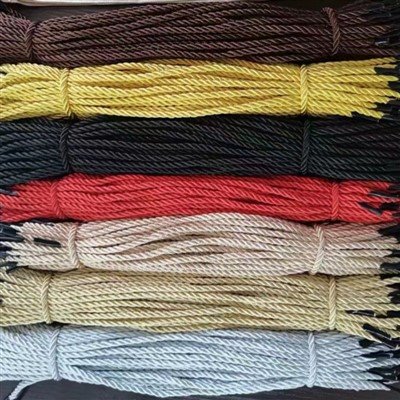
Don’t let flimsy, cracked plastic ruin your display or your brand’s reputation. Let’s get this right. Reach out anytime.
Color Carton Handles References:
- Plastic Hand Strap Durability: A Guide for Merchandisers, Retail Operations Magazine, 2022.
- Polyethylene and Polypropylene Degradation Under Environmental Conditions, Journal of Applied Polymer Science, 2021.
- Manufacturing Defects in Extruded Plastic Products, Polymer Processing Journal, 2020.
Tengzhou Fujin Plastic Products Co., Ltd.
As one of the most professional plastic hand strap manufacturers and suppliers in China, we also support customized service. With abundant experience, we warmly welcome you to buy bulk plastic hand strap made in China here and get pricelist from our factory. For price consultation, contact us.
Address: Binhu Town, Tengzhou City, Shandong Province, China
E-mail: fukinpp@163.com
WebSite: https://www.tzfujin.com/
