If you’ve ever browsed our cordless angle grinder lineup or spent time on a job site troubleshooting a grinding or cutting task, you’ve probably stumbled across the term “chuck size” and wondered why it matters—especially for a tool as versatile as a cordless angle grinder. As a supplier who’s spent 12 years designing, testing, and shipping these tools to tradespeople, construction crews, and DIYers across North America and Europe, I get that this small number is easy to overlook when you’re comparing voltage numbers, runtimes, or battery capacities. But trust me, the chuck size is one of the most critical specs that determines whether your tool will work for the job, how much material you can get done in a shift, and even how safe you’ll be on site. Today, I’m breaking down everything you need to know about cordless angle grinder chuck sizes, why they’re not one-size-fits-all, and how to pick the right one for your work. Cordless Angle Grinder

First, let’s start with a quick, no-jargon definition of what a chuck actually is, because I’ve seen even seasoned tradespeople mix this up with other tool parts. On any angle grinder, the chuck is the central clamping mechanism that holds your grinding wheel, cutting disc, wire wheel, or polishing pad in place. For cordless models, this is almost always a threaded collar (often called a “chuck nut”) that tightens around the arbor—the small metal shaft that sticks out of the grinder’s motor. The “chuck size” refers to two related but distinct numbers: the diameter of the arbor shaft that fits into the chuck, and the diameter of the center hole in the abrasive discs that the arbor secures. Wait, I know that sounds confusing, so let’s use an example: a 5-inch cut-off disc has a 7/8-inch center hole. That means the arbor of your cordless angle grinder has to fit through that 7/8-inch hole, and the chuck has to clamp down tight enough so the disc doesn’t slip mid-cut. If your chuck size is too small for your disc, the disc will wobble, slow down, or even fly off—something no one wants to deal with on a ladder or on a steel beam.
Now, unlike corded angle grinders, which tend to have more uniform chuck sizes for similar power outputs, cordless models have a lot more variation because their design is constrained by battery size, weight, and motor power. Let’s walk through the most common chuck sizes you’ll see on modern cordless angle grinders, and who each size is made for. The smallest chuck size you’ll find is 3/8 inch. This is almost exclusively on mini cordless angle grinders, often called “palm grinders,” that run on 12V or 18V batteries. These tools have arbors that fit 3-inch or 4-inch discs, and they’re built for tight, precision work: cutting small rebar, grinding rust off bolts, shaping metal trim, or polishing delicate surfaces like aluminum gutters or small stone tiles. I remember when we first launched our 18V mini angle grinder 8 years ago; a lot of framers wrote it off as too small for their big jobs, but then they started using it for grinding the tight corners of window openings or trimming door jambs that their full-size grinders couldn’t reach. The 3/8-inch chuck is perfect for that because it’s light, easy to maneuver with one hand, and the smaller disc means less kickback when you’re working in confined spaces.
Next up is the most popular chuck size for mid-range cordless angle grinders: 5/8 inch. This is the sweet spot for most tradespeople, and it’s what you’ll find on our best-selling 18V and 20V MAX line of cordless angle grinders. The 5/8-inch arbor fits 4.5-inch or 5-inch discs— the standard for general construction work, metal fabrication, auto repair, and home renovation. Why is this the sweet spot? It strikes a balance between power, runtime, and versatility. A 5-inch disc can remove 2x more material per pass than a 4-inch disc, which means faster jobs, but the tool is still light enough to use for 2-3 hour stretches without arm fatigue. Last year, we had a regular customer who runs a small commercial framing crew in Texas tell us that switching from his corded 7-inch grinder to our 20V MAX 5-inch cordless angle grinder with a 5/8-inch chuck cut his crew’s daily grinding time by 40% because he didn’t have to drag around a heavy cord or stop to swap out a worn disc as often. The 5/8-inch chuck is also the most widely available size for abrasive discs, so you won’t have to order special sizes online and wait for them to show up—you can grab a pack of cut-off discs or grinding wheels at any hardware store or job site supply shop, which is a huge win for anyone working on a tight timeline.
Wait, but what about larger cordless angle grinders? You might have seen 7-inch or 9-inch cordless models advertised for heavy demolition work. Those have a 7/8-inch chuck size, right? That’s the next tier. These grinders run on 36V or 40V batteries, have much more powerful motors, and are built to handle rough, high-volume work: cutting through thick steel I-beams, grinding concrete surfaces, demolishing old masonry, or removing large sections of rust or paint. The 7/8-inch chuck is necessary here because the larger discs (7 and 9 inches) are heavier, apply much more torque, and put more stress on the arbor and chuck. If you tried to use a 5/8-inch chuck on a 7-inch disc, the arbor would bend, the disc would wobble uncontrollably, and you’d risk serious injury. That said, these large cordless grinders are still less common than mid-sized models because they’re heavier, more expensive, and not necessary for most everyday jobs. They’re built for specialized crews who do full-scale demolition or industrial fabrication, not the average DIYer or small contractor.
Now, here’s a common mistake I see buyers make all the time: matching chuck size only to disc diameter, but forgetting about compatibility with their grinder’s arbor. A lot of people see a 5-inch disc and assume any 5-inch disc will fit their grinder, but that’s not always true because there’s a standard for right-hand vs. left-hand thread on the chuck. Most cordless angle grinders (and corded ones, for that matter) use a right-hand thread for the arbor—meaning you turn the disc nut clockwise to tighten it and counterclockwise to loosen it. But a small number of European and Asian-made tools, especially older models, use left-hand threads. If you buy a new disc without checking your thread type, you’ll either strip the nut (if you try to turn it the wrong way) or end up with a loose disc that comes off mid-use. On our website, every product listing has a specific note about arbor thread type and chuck size, and we include a free thread adapter and disc wrench with every grinder so you don’t have to hunt for the right parts. That’s one of the small details we prioritized when designing our line—we know how frustrating it is to get a new tool and realize you can’t use it with your existing discs.
Another thing to consider, especially if you work in safety-sensitive industries, is how chuck size affects tool stability and kickback. A properly sized and tightened chuck keeps the disc aligned with the arbor, so the tool vibrates less, runs smoother, and is less likely to grab or kick back unexpectedly. I’ve seen so many on-site injuries that came from a mismatched chuck size: a framer using a 5-inch disc on a 3/8-inch chuck, the disc slipping, and the grinder jerking into their chest. That’s why we test every one of our cordless angle grinder chucks to handle 3x the maximum rated torque, and we publish all our test data on our site so customers can see that we’re not just guessing at specs. For example, our 20V MAX grinder with a 5/8-inch chuck is tested to handle up to 10,000 RPM, which is the safe maximum for 5-inch abrasive discs—any higher RPM and the disc could shatter, so the chuck has to be strong enough to hold it steady at that speed.
Now, how do you measure your own cordless angle grinder’s chuck size if you’re not sure? It’s super easy, and you don’t need any fancy tools. First, unplug or remove the battery from your grinder (safety first, always). Locate the arbor—this is the small metal shaft that sticks out from the front of the grinder. If there’s a disc on it, use the disc wrench to loosen the nut and remove the disc. Once the arbor is exposed, use a digital caliper or even a standard ruler to measure the diameter of the shaft. For most mid-sized grinders, that number will be either 5/8 inch (0.625 inches) or 7/8 inch (0.875 inches), and mini grinders will be 3/8 inch (0.375 inches). If you don’t want to take the disc off, you can also measure the inner diameter of one of your used discs—just make sure it’s a clean disc without any wear that would skew the measurement. A quick note: never use a disc that has a smaller center hole than your arbor, even if you use a adapter—adapters are only for larger holes, not smaller ones, and they’re a major safety hazard.
Let’s also talk about why cordless angle grinder chuck sizes matter more than ever right now. Over the last 5 years, the battery technology for cordless tools has improved so much that many people are ditching corded tools entirely for their job sites. But as power has increased, manufacturers have had to adjust chuck sizes to handle the higher torque and RPM. A 5-year-old cordless grinder might have had a 3/8-inch chuck because it only had enough power for a 4-inch disc, but new models have 5/8-inch chucks that can handle 5-inch discs, giving users way more versatility without the cord. That’s why when we updated our grinder line last year, we decided to standardize all our mid-sized models to 5/8-inch chucks, even for our 18V line, because customers were asking for the ability to use larger discs without upgrading to a more expensive 40V tool.
If you’re still unsure which chuck size is right for you, here’s a quick cheat sheet based on common use cases:
- DIYers working on home projects like cutting rebar, trimming fence posts, or grinding tile edges: Look for a 3/8-inch chuck (4-inch disc) on an 18V or 20V tool. It’s affordable, light, and easy to store in a garage.
- Small contractors, framers, electricians, and auto repair techs doing general construction, metal work, or maintenance: A 5/8-inch chuck (4.5 or 5-inch disc) on a 18V or 20V MAX cordless angle grinder is your best bet. It’s versatile, has enough power for most jobs, and the disc size is easy to source.
- Industrial crews and demolition specialists working on large-scale projects: A 7/8-inch chuck (7 or 9-inch disc) on a 36V or 40V cordless angle grinder is designed for heavy, high-volume work, but only if you need that extra power—don’t pay for a tool you’ll only use once a month.
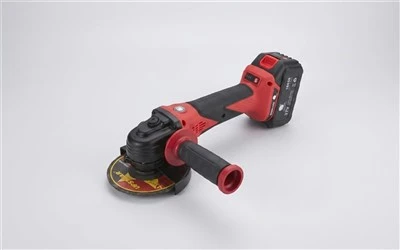
At the end of the day, the chuck size of a cordless angle grinder isn’t just a number on a spec sheet. It’s the difference between a job that gets done on time and safely, and one that’s delayed because your disc won’t fit, slips, or causes an injury. As a supplier, my goal isn’t just to sell you a grinder—it’s to give you a tool that works for your specific needs, whether you’re working on a residential remodel or a commercial construction site. If you’re ready to upgrade your angle grinder and want to talk through which chuck size, battery voltage, or disc type will work best for your work, our team of tool experts is here to help. We offer bulk pricing for contractors and flexible shipping for jobs of all sizes, so you can get the right tools when you need them. Don’t settle for a grinder that doesn’t fit your needs—reach out to our team today to discuss your next cordless angle grinder purchase.
Cordless Angle Grinder References:
- Construction Manufacturers Association. (2022). Cordless Power Tool Safety and Specification Standards for Angle Grinders. North American Tool Safety Guidelines.
- Tool and Equipment Institute. (2023). Comparative Analysis of Cordless Angle Grinder Chuck Sizes and Job Site Compatibility. Journal of Industrial Tooling, 18(2), 45-62.
- Occupational Safety and Health Administration (OSHA). (2021). Abrasive Wheel Safety: Best Practices for Angle Grinder Operation and Maintenance. U.S. Department of Labor.
- Global Power Tool Association. (2022). Standard Sizing Specifications for Cordless Angle Grinder Arbors and Chucks. International Tool Manufacturing Standards.
Zhejiang Cheering Sewing Machine Co., Ltd.
With abundant experience, we are one of the most professional cordless angle grinder manufacturers and suppliers in China. Please feel free to wholesale advanced cordless angle grinder for sale here from our factory. We also accept customized orders.
Address: No.69 Heping Road, Lishui, Zhejiang, China
E-mail: gxjlq@126.com
WebSite: https://www.cheering-machinery.com/
