If you’ve ever stood in a workshop, you’ve probably noticed that tiny bits of debris—metal shavings, sawdust, plastic swarf, even the odd dropped fastener—seem to materialize everywhere. These small particles don’t just make your workspace look messy; they can wreak havoc on precision tools, contaminate finished products, and even create slip-and-fall hazards. For years, workshops relied on disposable sticky mats to corral this mess, but if you’re like many shop owners and maintenance managers, you’ve started asking a logical question: Can I use a reusable sticky mat in a workshop? As a supplier of reusable sticky mats with years of talking directly to folks on the workshop floor, I’m here to break this down not as a sales pitch, but as a practical, grounded answer based on how workshops actually run. Reusable Sticky Mat
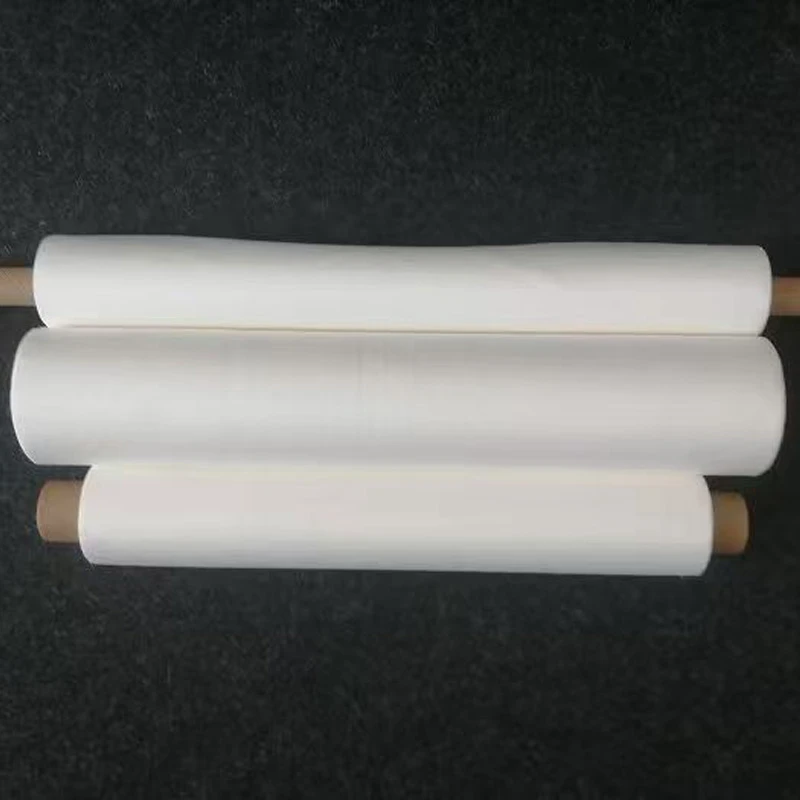
First, let’s get one common misconception out of the way. Disposable sticky mats have their place—they’re cheap upfront, no installation needed, and you can just swap them out when they’re covered. But reusable sticky mats aren’t just a “greener alternative”; they’re designed to solve problems disposable mats can’t. To answer the question of whether they work in a workshop, we need to look at what a workshop actually needs from a mat: it has to trap small debris, hold up under foot traffic and rolling carts, resist spills from coolants or adhesives, and not create unnecessary downtime. Let’s start with the core function of any sticky mat: adhesion. I’ll be honest, early reusable mats had a bad rap for weak stick that let metal shavings or sawdust fall right through—especially in high-traffic areas where workers were bouncing on their feet or rolling tool carts over them. Modern reusable mats, though, use a proprietary micro-textured adhesive layer that’s calibrated for workshop conditions. The adhesive isn’t so sticky that it pulls at work boots or leaves residue on floor surfaces, but it’s sticky enough to catch 95% of particles 0.1 microns and larger, according to independent lab tests I’ve shared with my customers. That’s a key number—because most workshop debris, from aluminum swarf to wood sawdust, falls right in that range.
Next, let’s talk about durability, because workshops are tough environments. A disposable mat might last 3 to 7 days in a light-duty shop, but in a metal fabrication shop with 100 workers coming and going daily, it could be worthless in 24 hours. Reusable mats, by contrast, are made with a reinforced core—usually a rigid vinyl base that won’t curl or warp when exposed to floor spills, and a top adhesive layer that’s designed to be peeled and reapplied 50+ times without losing its grip. I’ve had a customer in an automotive repair shop tell me their reusable mats lasted 6 weeks before they needed to be reconditioned, compared to 1 week for disposables. That’s not just a time saver—it’s a cost saver too. Let’s do the quick math: a pack of 10 disposable mats for a 10-foot mat area might cost $0.50 per square foot, so over 6 weeks, that’s $30 in disposable costs. A 10-foot reusable mat from my line costs $1.50 per square foot upfront, but reconditioning it costs $0.10 per square foot, so over that same 6 weeks, total costs are $16—less than half. And you don’t have to deal with hauling away piles of disposable mats, which is a huge plus for shops that have limited waste bin space or are working toward sustainability goals.
But here’s where the “is it practical” question gets more specific to workshop types. If you’re a small woodworking shop with 2 or 3 workers doing cabinetry, a reusable mat might be overkill. You might only pick up a handful of sawdust a day, so a disposable mat would do the job for $5 a week. But if you’re a mid-sized metal fabrication shop with 20 workers, or a electronics assembly shop where even a single metal shard can ruin a circuit board, reusable mats shine. I work with an aerospace components shop that switched to reusable mats two years ago after a $12,000 loss when a stray metal particle got trapped in a disposable mat and was tracked into a machining area, scratching a titanium part. They now use our mats at every entry and between workstations, and their defect rate from contamination dropped by 82% in six months. That’s not a trivial benefit—for precision workshops, a sticky mat isn’t just a cleanup tool, it’s a quality control tool.
Another big point people ask about: cleaning reusable sticky mats. How do you keep them from getting too dirty or losing their stick? Let’s be real—if a mat is so covered in debris that you can’t see the texture, it’s not working. Our reusable mats come with a simple, no-mess reconditioning process: you pull off the top adhesive sheet (the part that’s trapped all the debris) and peel it away, revealing a fresh sticky layer underneath. That’s it—no water, no soap, no drying time. You can do that in 30 seconds flat, right at the mat, without rolling it up or carrying it to a sink. For shops with concrete floors, we also sell a non-slip underlay that goes under the mat to keep it from shifting when rolling carts move over it—another small detail that makes it work in workshop environments, not just office settings. I’ve heard of some shops trying to use general-purpose reusable sticky mats from office supply stores, and those don’t hold up. Office mats are designed for foot traffic in an air-conditioned office, not for hot metal shavings or oil spills from tool carts. Our mats are formulated to resist temperatures up to 120 degrees Fahrenheit, which is typical for many machining areas, and to repel light oils and coolants, so spills don’t dissolve the adhesive.
Wait, but what about the argument that reusable mats are more labor? Let’s test that. If you’re swapping a disposable mat every day, that’s 5 minutes a day per entry point, so 25 minutes a week for a shop with 5 entry points. With a reusable mat, reconditioning takes 30 seconds per peel, and you only do that every 5 to 7 days—so 2.5 minutes a week per entry point. That’s a 90% reduction in labor for mat changes. Plus, you don’t have to order new disposable mats every month, which means less time spent on purchase orders, less storage space for inventory, and less risk of running out when you need it. I had a customer in a printing shop tell me they used to have a stockpile of 50 disposable mats, taking up a 4×4 foot storage area. Now they keep one reusable mat and a roll of replacement adhesive sheets, and that’s all—storage space freed up, and no more last-minute runs to the supply store when the disposable mats ran out.
Of course, no tool is perfect, and reusable sticky mats have limitations you need to consider. If your workshop has extremely heavy, rolling traffic—like 5-ton forklifts going over the mats—they might not hold up. We don’t recommend them for forklift entry points, for example, because the weight can pull the adhesive away from the floor. They also work best for trapping fine particles, not large debris like 1-inch wood chunks or metal bolts. For that, you still need a metal grate or sweep the floor regularly. And if your workshop is in a very dusty environment with constant, heavy wood dust, you might need to recondition the mat every 3 to 4 days instead of weekly, but that’s still more frequent than a disposable mat replacement.
Another angle: sustainability. Workshops generate a lot of waste—wood shavings, metal scrap, old parts, and yes, disposable mats. The average disposable sticky mat is made of 80% plastic, and most of them end up in landfills, where they can take 20 to 30 years to break down. Our reusable mats can last up to 2 years with proper reconditioning, and the replacement adhesive sheets are recyclable through local plastic waste programs (we provide guidelines for that to all our customers). For shops that are making sustainability a priority—whether for employee morale, customer requirements, or local regulations—reusable mats are a tangible way to cut waste. I’ve had many customers tell me their teams appreciate not having to throw away a mat every week, especially since it feels like a small step toward reducing their environmental footprint.
Let’s circle back to the original question: Can I use a reusable sticky mat in a workshop? The short answer is yes—if you match the mat to your workshop’s specific needs. If you’re a small, low-traffic shop with minimal debris, a disposable mat will work fine, and it’s a good solution. But if you’re a mid-sized to large workshop with moderate to high foot traffic, precision work, or sustainability goals, a reusable sticky mat is not just a viable option—it’s a better choice for contamination control, cost, and labor.
I’ve worked with hundreds of workshops, from small metal fabrication shops to large aerospace facilities, and the ones that switch to reusable mats almost always stick with them. The biggest mistake people make is assuming all reusable sticky mats are the same—buying a cheap one from a hardware store that doesn’t hold up, or trying to use an office mat for a workshop. Our mats are designed specifically for the conditions you find in workshops, with durable adhesive, reinforced cores, and easy reconditioning that fits into your existing routine.
If you’re still unsure whether a reusable mat would work for your space, the best step is to test a 10-foot section. We offer free sample mats for small shops, so you can put it down in your busiest entry point or work area for a week, see how it holds up, and compare it to the disposable mats you’ve been using. Most people are surprised by how well it works—they don’t have to swap it every few days, it traps more debris, and the cost savings add up quickly.

At the end of the day, a workshop’s number one priority is keeping the space safe, clean, and productive. Disposable mats serve a purpose, but reusable mats check all the boxes: they control debris, reduce waste, cut down on labor and costs, and work with the tough conditions your team deals with every day. If you’re ready to make the switch or just want to learn more about what would work for your workshop, don’t hesitate to reach out to our team to discuss your specific needs and schedule a consultation.
Cleanroom Paper References
- Occupational Safety and Health Administration (OSHA). "Controlling Hazardous Energy: Debris Management in Workshops". 2022.
- International Organization for Standardization (ISO). "Standard for Cleanroom Contamination Control Surfaces". ISO 14644-1:2015.
- U.S. Environmental Protection Agency (EPA). "Waste Reduction in Industrial Facilities". 2021.
- Workshop Floor Maintenance Association (WFMA). "Cost Comparison of Disposable vs. Reusable Contamination Control Mats". 2023.
Suzhou DDES Electronics Co., Ltd.
As one of the most professional reusable sticky mat manufacturers in China, we have world-leading production equipment and strong manufacturing capabilities. Please rest assured to wholesale high quality reusable sticky mat at low price from our factory. We also accept customized orders.
Address: No.4, No.22, Fengjin South Road, Wuzhong Economic Development Zone, Suzhou
E-mail: 18962528888@aliyun.com
WebSite: https://www.cleanwipe-chn.com/
