Hey there! I’m a supplier of Central Drive Thickeners, and today I wanna chat about how the feed rate affects the performance of these bad boys. Central Drive Thickener

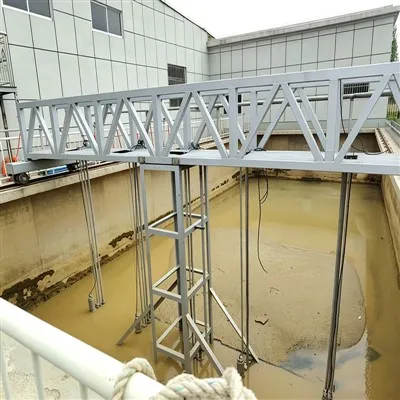
First off, let’s talk about what a Central Drive Thickener is. It’s a piece of equipment used in various industries, like mining, wastewater treatment, and chemical processing. Its main job is to separate solids from liquids by using gravity. The thickener has a large tank, and a central drive mechanism rotates a rake that helps in the settling of solids at the bottom, while the clarified liquid rises to the top.
Now, the feed rate is the amount of slurry (a mixture of solids and liquids) that’s fed into the thickener per unit of time. It’s a crucial factor that can have a huge impact on how well the thickener performs.
Low Feed Rates
When the feed rate is low, it might seem like a good thing at first. The thickener has more time to handle the incoming slurry. The solids have a better chance to settle properly because there’s less competition for space in the tank. This can lead to a higher quality of the underflow (the thickened solids at the bottom). The underflow density can be higher, which means you’re getting more solids out in a more concentrated form.
For example, in a mining operation, if the feed rate of the ore slurry is low, the thickener can do a better job of separating the valuable minerals from the waste. The settled solids can be more easily removed and processed further, while the clarified liquid can be recycled back into the process, saving water and reducing costs.
However, there are also some downsides to low feed rates. One of the main issues is that the thickener’s capacity isn’t being fully utilized. If you’re paying for a large thickener, but you’re only using a small fraction of its capacity, you’re not getting the most bang for your buck. The overall throughput of the process is lower, which can slow down production.
High Feed Rates
On the flip side, high feed rates can cause a whole bunch of problems. When you’re pumping a large amount of slurry into the thickener in a short period of time, the solids don’t have enough time to settle properly. This can lead to a phenomenon called "carry – over," where some of the solids are carried out with the overflow (the clarified liquid at the top).
In a wastewater treatment plant, if the feed rate of the sewage is too high, the thickener might not be able to separate all the solids. As a result, the overflow might still contain a significant amount of suspended solids, which can cause problems downstream in the treatment process. The water quality might not meet the required standards, and there could be additional costs for further treatment.
Another problem with high feed rates is that the rake in the thickener has to work harder. The increased load on the rake can cause mechanical stress and wear. This can lead to more frequent maintenance and repair, which can be costly and can also disrupt the operation of the thickener.
Finding the Sweet Spot
So, how do you find the right feed rate for your Central Drive Thickener? Well, it depends on a few factors.
The first factor is the characteristics of the slurry. Different slurries have different settling properties. For example, a slurry with larger and heavier particles will settle more quickly than a slurry with fine and light particles. If you’re dealing with a slurry that settles easily, you might be able to handle a higher feed rate. On the other hand, if the slurry has poor settling characteristics, you’ll need to keep the feed rate lower.
The second factor is the design and capacity of the thickener. A larger thickener with a higher capacity can generally handle a higher feed rate. You need to make sure that the feed rate doesn’t exceed the thickener’s design limits. If you’re not sure about the capacity of your thickener, you can consult the manufacturer’s specifications or get in touch with an expert.
The third factor is the desired output. If you need a high – quality underflow with a high density of solids, you might need to keep the feed rate lower. If your main goal is to maximize the throughput of the process, you can try to increase the feed rate, but you need to be careful not to cause carry – over or other problems.
Monitoring and Adjusting
Once you’ve set an initial feed rate, it’s important to monitor the performance of the thickener. You can measure the density of the underflow and the clarity of the overflow. If you notice that the underflow density is too low or the overflow has too many solids, you might need to adjust the feed rate.
You can also use sensors and control systems to automate the process. These systems can monitor the feed rate, the level of the slurry in the tank, and other parameters. They can then adjust the feed rate in real – time to optimize the performance of the thickener.
Conclusion
In conclusion, the feed rate has a significant impact on the performance of a Central Drive Thickener. Both low and high feed rates have their pros and cons, and finding the right feed rate is crucial for getting the best results. As a supplier of Central Drive Thickeners, I’ve seen firsthand how important it is to understand the relationship between feed rate and performance.
Thickener If you’re in the market for a Central Drive Thickener or you’re having issues with the feed rate of your existing thickener, I’d love to have a chat with you. We can discuss your specific needs and find the best solution for your operation. Don’t hesitate to reach out and start a conversation about how we can improve your thickening process.
References
- Smith, J. (2018). Handbook of Thickening Technology. Publisher: ABC Press.
- Johnson, R. (2019). "Optimizing Feed Rates in Central Drive Thickeners." Journal of Industrial Processing, 25(3), 123 – 135.
- Brown, S. (2020). "The Impact of Feed Characteristics on Thickener Performance." International Journal of Mineral Processing, 150, 78 – 85.
Shandong Ningye Machinery Equipment Co., Ltd.
Shandong Ningye Machinery Equipment Co., Ltd. is one of the most reliable central drive thickener manufacturers and suppliers in China. With abundant experience, we warmly welcome you to buy discount central drive thickener made in China here from our factory. Quality products and low price are available.
Address: Workshop No. 16, Dongcao Village Industrial Park, Guangda East Road, Songguantun Subdistrict, Economic and Technical Development Zone, Dezhou City, Shandong Province
E-mail: ningyejixie@163.com
WebSite: https://www.cn-ningye.com/
