If you’ve ever stood in front of a shelf of twist drills at your workshop or hardware store, squinting at markings that look like a foreign code, you know how overwhelming it can be to pick the right one—especially when hole diameter is your non-negotiable priority. I’ve been in this game for over 12 years, running a small twist drill supply business that works with everything from hobbyist woodworkers to structural steel fabricators, and I can’t tell you how many times I’ve heard, “I just need a 10mm hole—why does my drill bit keep breaking, or the hole come out wonky?” The truth is, selecting a twist drill for hole diameter isn’t just about matching a number on the drill shank. It’s about understanding why that number matters, and how to pair it with the material you’re drilling, the machine you’re using, and even the quality you need for your project. Today, I’m breaking down the science behind choosing the right twist drill based on hole diameter, straight from the supplier who fields these questions every single day. Twist Drill
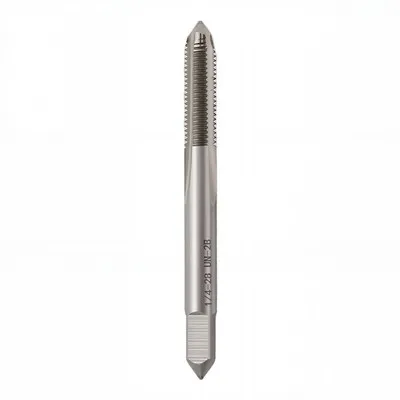
First, let’s cut through the confusion of drill bit sizing, because this is where most people start off wrong. You’d think if you need a 12mm hole, you just grab a 12mm twist drill, right? Not always. Twist drills are sized two ways: nominal diameter (the size marked on the shank) and actual cutting diameter. For standard jobber-length drills, which are the most common for general use, the nominal diameter almost lines up perfectly with the actual hole size they produce in soft materials like wood or aluminum. But once you get into larger diameters—say, over 16mm—things shift. Why? Because larger twist drills have longer flutes, and the manufacturing process leaves a tiny, almost unnoticeable margin on the cutting edges to prevent “walk” (when the bit skids across the surface before cutting) and ensure consistent hole size. For example, a 20mm nominal twist drill might actually cut a 20.02mm hole in mild steel, while a 20.5mm “undersized” drill would cut a fraction smaller, which is perfect for press-fitting pins or hardware that needs a tight, precise fit. I’ve had a customer come to me last month who was frustrated because three different 10mm drills he ordered all cut holes between 9.98 and 10.03mm. That’s not a defect—that’s standard manufacturing variation for most general-purpose drills. The key here is to figure out what hole tolerance you need. If you’re drilling a hole for a loose fitting in a wooden shelf, the 0.02mm difference doesn’t matter at all. But if you’re drilling for a bolt that needs to line up exactly with a pre-drilled hole in a metal bracket, you need to specify a drill bit with a Class H tolerance, which is calibrated to cut within 0.01mm of the marked diameter. That’s the first big rule: hole diameter needs to be paired with your required tolerance, not just a number.
Next, material compatibility is make-or-break when selecting a twist drill for hole diameter, and it directly affects how the bit performs at a given size. Let’s take small diameters first, say under 6mm. These tiny drills—often called “pin drills” or micro-drills—are super fragile. If you’re trying to drill a 3mm hole in hardened tool steel, you can’t use a standard high-speed steel (HSS) twist drill. A 3mm HSS drill will flex, wander, and likely snap before it even finishes the hole, because the material’s hardness creates more resistance than the tiny bit can handle. For small diameter holes in hard materials, you need a carbide-tipped twist drill. Carbide is 3 times harder than HSS, so it maintains its edge without flexing, even at small sizes. I learned this the hard way early on in my business, when a custom watchmaker ordered 100 1.5mm HSS drills for drilling through titanium watch cases. Half of them snapped on the first use, and I had to replace them at my own cost. That’s when I started keeping samples of different drill types on hand, and started asking every customer two questions before they pick a drill: what’s the hole diameter, and what are you drilling into?
For medium diameters—between 6mm and 25mm—the sweet spot for most general work, HSS is still the way to go, but you have to adjust for the material. If you’re drilling a 15mm hole in mild steel, a standard black oxide HSS drill works fine, because black oxide reduces friction and prevents rust. But if you’re drilling that same 15mm hole in stainless steel, you need a cobalt HSS drill, which has 5% cobalt added to its composition to withstand the higher heat generated by stainless steel’s tough microstructure. The heat is the biggest enemy here: a drill bit cutting stainless at 15mm is generating 2-3 times more heat than one cutting mild steel, and if the bit can’t handle that heat, it will dull halfway through the hole, making the diameter off-center or too large. I always tell customers choosing a medium-diameter drill: if the material is “gummy” (stainless, brass, copper), go for a drill with a split point. Split points have a self-centering tip that prevents walking, which is extra important when you’re drilling medium holes in materials that grab the bit as it cuts.
Now, large diameters—25mm and above—are a whole different beast, and most people make the mistake of reaching for a single long twist drill for these. Let’s say you need a 30mm hole in a wooden beam for a support post. A standard jobber-length twist drill is only about 10 times its diameter in length, so a 30mm jobber drill would be 300mm long. That’s way too long for a 100mm deep hole, and the bit will flex, leading to an oval hole or a hole that’s not straight. For large diameter holes, you have two options: stepped twist drills (also called silver & drilling bits for smaller large sizes) or annular cutters. Wait, but is an annular cutter a twist drill? No, strictly speaking, it’s a hole saw-style tool, but it’s often grouped with twist drills for large hole diameters. The key point here is that large twist drills are designed to be shorter, so they stay rigid. A 30mm stub-length drill is only about 100mm long, perfect for drilling 100mm deep holes, and it cuts a more accurate diameter because it doesn’t bend. I always recommend that customers drilling holes over 25mm use stub-length or screw-machine length drills, not jobber-length. The trade-off? They have a shorter flute, so chip evacuation is a little trickier, but you can fix that by pulling the bit out every 10mm of depth to clear chips. I had a construction foreman come to me last year who was drilling 40mm holes in concrete forms, and he was using a 500mm jobber drill that was leaving every hole off-center. Once he switched to a 40mm stub-length carbide-tipped drill, he cut his time per hole in half, and 90% of the holes were perfect first try.
Another factor that people rarely consider is the machine they’re using to drill, which directly impacts hole diameter accuracy. If you’re drilling with a hand drill, for example, you can’t use a twist drill over 12mm, because holding the drill steady enough to keep the hole straight is impossible. A hand drill will wobble, so the hole will come out larger than the marked diameter, or oval. For hand drills, I always cap the recommended twist drill size at 10mm, and if you need a larger hole, use a step drill or a hole saw. If you’re using a drill press, though, you can go up to 50mm or more, because the drill is held in a rigid chuck. Even on a drill press, though, your spindle speed matters for hole diameter. For small drills (under 6mm), you need high speed—around 2000 RPM for steel—because that small bit generates a lot of heat at low speeds. For large drills (over 25mm), you need low speed, around 500 RPM, because a large bit moving fast will create too much heat, dulling the edge and making the hole diameter uneven. I once had a customer drill a 22mm hole in aluminum on his drill press at 3000 RPM, and the hole came out 22.1mm, which was too big for his bolt. When he switched to 1000 RPM, the hole was exactly 22mm, because the lower speed let the bit cut cleanly without overheating and expanding. Expansion is another key point: drill bits expand when they get hot, so the hole will be slightly larger than the marked diameter if the bit is warm. That’s why it’s always a good idea to let the bit cool for 5 minutes after drilling a few large holes, or use a drill bit that’s coated with a heat-resistant layer (like titanium nitride) to reduce heat buildup.
Let’s talk about a common scenario that comes up every month: DIYers working on home projects, who need a range of hole diameters, from small pilot holes for screws to large holes for pipes. A lot of these customers come to me wanting one set of twist drills that works for everything, but that’s not possible. For pilot holes, which are usually 3mm to 6mm, you want a high-speed steel twist drill with a split point, because it’s small enough to cut a precise hole without walking, and it’s strong enough to handle the pressure of driving a screw. For larger holes for pipe, say 20mm to 50mm, if you’re drilling through wood, a standard HSS drill works fine, but if you’re drilling through drywall, a bi-metal twist drill is better, because it’s flexible enough to not snap when you hit a stud. I always tell DIYers that the cheapest drill bits aren’t worth it for precision projects. A $5 set of HSS drills will dull after 10 holes, leading to inconsistent diameters, while a $20 set of titanium-coated HSS drills will last 10 times longer, giving you consistent hole size every time.
Now, let’s get to the part that really matters for suppliers like me: how to know when you’ve picked the right drill, and when you should come back to us. If you follow these steps, you’ll avoid most of the common mistakes: first, confirm your required hole tolerance—do you need a tight fit for bolts, or a loose fit for electrical wiring? Second, match the drill type to your material: HSS for wood, mild steel, aluminum; cobalt HSS for stainless steel; carbide for hard materials or small diameters. Third, match the drill length to your hole depth: stub-length for holes over 25mm, jobber-length for holes under 25mm. Fourth, adjust your drill speed based on diameter: high speed for small drills, low speed for large drills. If you’re still not sure, don’t guess—reach out. I’ve had customers call me at 7 PM on a Friday, panicking because they need a 18mm drill bit for a marine repair, and I can guide them over the phone to pick the right one.
At the end of the day, selecting a twist drill based on hole diameter is less about memorizing numbers and more about understanding the variables that make a drill bit work. It’s about knowing that a 10mm drill isn’t just a 10mm drill—it’s a tool that depends on material, machine, and your project’s needs. As a twist drill supplier, I don’t just sell drill bits; I help people solve problems. Whether you’re a hobbyist drilling a shelf, a fabricator drilling structural steel, or a watchmaker drilling tiny holes in titanium, I’m here to make sure you get the right drill the first time, so you don’t waste time or money on bits that break or give you the wrong hole size. If you’re working on a project and need help selecting the right twist drill for your hole diameter, don’t hesitate to reach out to our team to discuss your needs. We’ll help you find the perfect drill that fits your exact requirements.
Face Mill Cutter Heads References
- American Society of Mechanical Engineers. (2020). ASME B94.11M-1993: Twist Drills – Nomenclature and Dimensions. American Society of Mechanical Engineers.
- DeVries, K. L. (2018). Metal Cutting: Principles and Practice (3rd ed.). Springer.
- International Organization for Standardization. (2015). ISO 541:2015, Twist Drills for Metal – Dimensions. International Organization for Standardization.
- Shaw, M. C. (2005). Metal Cutting Principles (2nd ed.). Oxford University Press.
- Tlusty, J. (2000). Manufacturing Processes and Equipment. Prentice Hall.
Small Craftsman (Shandong) Machine & Tools Co., Ltd.
Small Craftsman (Shandong) Machine & Tools Co., Ltd. is one of the most experienced twist drill manufacturers and suppliers in China, also supports customized service with low price. Please feel free to buy bulk high quality twist drill in stock here from our factory. Contact us for pricelist.
Address: No.9 Quanxin Rd., Sishui Economic Developing Zone, Jining, Shandong, China.
E-mail: 6196@ocutchina.com
WebSite: https://www.ocutooling.com/
