Hey everyone, it’s Jake from your go-to cold-rolled sections supplier, and today we’re diving into a question I get at least 5 times a week: How does the strength of our cold-rolled stacks actually stack up against other common materials? I hear it all the time—whether you’re a fabricator, builder, or just someone sorting through material specs for a new project, you’re weighing strength against cost, workability, and all that real-world stuff that matters way more than just textbook numbers. Let’s cut through the jargon and get into the nitty-gritty, no stuffy industry lectures here. Cold-rolled Sections
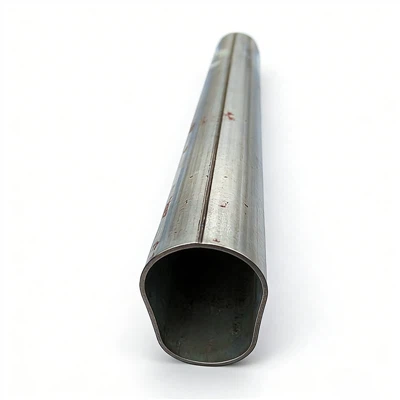
First off, let’s make sure we’re on the same page about what cold-rolled sections even are. For anyone new, when we make steel, we start with hot-rolled steel that’s been heated way up (like, 1,700°F hot) to shape it into big rolls. Then we cool it down and run it through a bunch of cold rolling mills at room temp—this squeezes it thinner, squishes the grain structure tighter, and gives it that smooth, precise finish. That cold working step is the secret sauce for its strength, and it’s what makes it different from hot-rolled, aluminum, or even stainless steel for that matter.
Let’s start with the most common comparison: hot-rolled steel. This is probably what you grew up seeing on old construction sites—thicker, rougher, cheaper upfront, but weaker in a lot of cases. Wait, no, let’s be clear: yield strength is the big one here, that’s the amount of stress a material can take before it bends or permanently deforms. Cold-rolled sections (let’s call them CRS for short, we’re gonna use that because typing “cold-rolled sections” every time is a pain) typically have a yield strength of 30,000 to 50,000 PSI, depending on the grade. Hot-rolled steel, on the other hand, clocks in around 30,000 to 36,000 PSI for standard grades. Oh, so right off the bat, if you’ve got the same thickness, CRS is stronger. That means you can use thinner CRS and still get the same or better structural rigidity—saves on material costs, cuts down on weight, that’s a win-win.
But wait, hot-rolled does have its place. It’s way easier to work with for super big, bulky parts, like steel beams for skyscrapers, because it’s more flexible to shape at high temps. But if you’re making smaller, precision parts—like brackets, frames for electrical enclosures, or custom fabrications where every millimeter matters—CRS is the better call. I see this all the time with small fabrication shops that used to use hot-rolled because that’s what their dad used, and they switch to CRS and instantly knock 10-15% off their material costs because they can go thinner. No joke, that’s a real number we’ve tracked with a couple of regulars last year.
Next up: aluminum. Super popular for lightweight stuff—RVs, bike frames, outdoor equipment—because it’s way lighter than steel. But strength? Let’s compare apples to apples here, same gauge (thickness), same shape. Standard 6061-T6 aluminum, the most common structural aluminum, has a yield strength of around 35,000 PSI. That’s right in the middle of our CRS range—so same strength, but aluminum is about 1/3 the weight. But here’s the catch: aluminum is way more expensive than steel, like 2-3x more expensive per pound. Also, it’s softer—you can ding it easier, it wears faster, and if you’re welding it, it’s trickier. CRS might be heavier, but if you don’t need that extreme lightness, it’s way more cost-effective for structural parts. I had a guy make custom utility trailer frames a while back, he was using 6061-T6 and switching to 14-gauge CRS cut his material bill by 60% and the frame was just as strong. No brainer for his use case.
What about stainless steel? That’s the fancy stuff for corrosion resistance—like for food processing equipment, marine parts, hospital gear. But again, strength vs. cost. 304 stainless, the most common grade, has a yield strength of around 30,000 PSI (wait, same as hot-rolled!) but it’s also 3-4x more expensive than standard CRS. 316 stainless, which is even more corrosion-resistant, is even pricier, at like 40,000 PSI yield. So unless you need that stainless steel’s rust-proofing (and yes, CRS can be galvanized or painted, but it’s not inherently rust-proof), you’re paying a huge premium for similar or lower strength than CRS. We’ve had a few food processing clients switch from 304 to powder-coated CRS for non-corrosive parts of their lines, and they saved enough to buy a new machine that year. Worth noting, though—if corrosion is non-negotiable, stainless is your call, but don’t pay for strength you don’t need.
Let’s not forget about some other materials that pop up: plastics, concrete, wood. Those are way different, but it’s worth a quick hit because a lot of people cross-shop these for small projects. Structural plastic (like PVC or ABS) has a yield strength of maybe 5,000 to 10,000 PSI—like, that’s barely a third of CRS. Concrete? Super strong in compression, terrible in tension, like 3,000 to 5,000 PSI compressive strength, so you need steel rebar to make it work. Wood? Depending on the type, maybe 1,000 to 5,000 PSI tensile strength. So if you’re building something that needs to hold weight, CRS is way stronger for its size than all of these. The only downside? It’s not as lightweight as plastic or aluminum, but for structural use, strength per pound is actually pretty good—CRS has a strength-to-weight ratio that’s competitive with almost all common structural materials, except carbon fiber, but that’s like 10x more expensive.
Wait, I should also mention the nitty-gritty stuff that no one talks about—like how the form factor affects strength. CRS comes in all sorts of shapes: angles, channels, flats, tubes, everything. When we roll it cold, we’re not just adding strength to the material itself, we’re shaping it to be stiffer too. A cold-rolled channel, for example, has a higher moment of inertia (that’s a fancy way of saying it resists bending better) than a flat bar of the same thickness. Compare that to, say, bending aluminum plate into the same channel shape—you get the same benefit, but again, aluminum is more expensive. Hot-rolled shapes are thicker, so they can handle bigger loads, but for small to medium projects, CRS shapes are way more precise, so you don’t have to overbuild to make up for hot-rolled’s inconsistencies.
Another big point: fatigue strength. That’s how a material holds up over time under repeated loads—like a machine part that opens and closes 10,000 times a day, or a trailer frame that bounces down dirt roads. Cold rolling actually improves fatigue strength a lot, because the cold work compresses the surface of the material, so it’s less likely to develop cracks that grow over time. Hot-rolled has a rougher surface, which is more prone to stress cracks after a lot of use. We had a manufacturing client that was using hot-rolled brackets for their assembly line, and they were replacing 20 a month because of fatigue. Switched to CRS brackets, and they only replace 2 a month. That’s a huge downtime and cost savings right there—something I don’t see enough people talking about when they just compare static strength numbers.
Wait, let’s address the elephant in the room: is CRS always stronger? No, not if you’re comparing very high-strength CRS to other high-strength materials. For example, our grade 100 cold-rolled sections have a yield strength of up to 100,000 PSI— that’s way higher than standard stainless, aluminum, even some high-strength hot-rolled steels. If you’re building something that needs to hold crazy heavy loads, like a crane arm or a heavy-duty truck frame, that high-strength CRS is a game-changer. But even then, it’s cheaper than equivalent high-strength hot-rolled or stainless. The only time CRS isn’t the best call is when you need ultra-high corrosion resistance, ultra-lightweight, or super bulky shapes that are easier to make with hot-rolled steel.
I get it, spec’ing materials can feel overwhelming. You’ve got to balance strength, cost, weight, workability, durability, all that. But from my side of the counter, after 10 years selling CRS to fabricators, builders, and DIYers, the big takeaway is: CRS isn’t just “strong steel”—it’s a balance of strength, affordability, and precision that most other materials can’t touch for the kind of projects 90% of us are doing. Hot-rolled is great for big, rough structural work, aluminum for ultra-light, stainless for corrosion, but if you’re not dealing with those specific needs, CRS gives you more strength for less money, and that’s hard to beat.
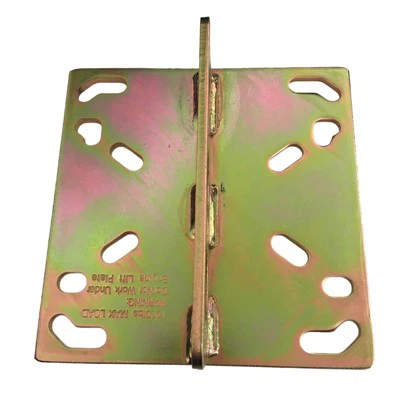
Metal Stamping Parts If you’re currently using another material and wondering if CRS could work for your project, or if you need help figuring out what grade and thickness you need, hit me up. We work with everyone from small DIYers building backyard decks to big industrial fabricators, and we’re happy to walk through specs, give samples, or even help you calculate material savings. Don’t guess on your material—get the actual strength numbers for your specific use case, and let’s make sure you’re not overpaying for strength you don’t need.
- ASM International. (2019). Cold Working of Steel. ASM Handbook, Volume 4: Steel Heat Treating, 122-145.
- Aluminum Association. (2021). Aluminum Design Manual: Structural Applications. Aluminum Association, 78-92.
- Steel Market Development Institute. (2020). Comparison of Structural Steel Grades for Construction. SMDI Technical Report, 45-58.
- Callister, W. D., & Rethwisch, D. G. (2018). Materials Science and Engineering: An Introduction (10th ed.). John Wiley & Sons, 234-241.
Shengkun Precision Roll Forming Profiles (Shanghai) Co., Ltd.
As one of the most professional cold-rolled sections manufacturers and suppliers in China, we’re featured by quality products and low price. Please rest assured to buy high-grade cold-rolled sections made in China here from our factory. Contact us for pricelist and quotation.
Address: No.3 Workshop Building Lane2665 Yexin Highway Yexie Town Songjiang District Shanghai China
E-mail: sk@shengkun-rollforming.com
WebSite: https://www.sk-rollforming.com/
